Använd detta utrymme för att introducera dig själv.
Vem du är, vad du gör och var du är.
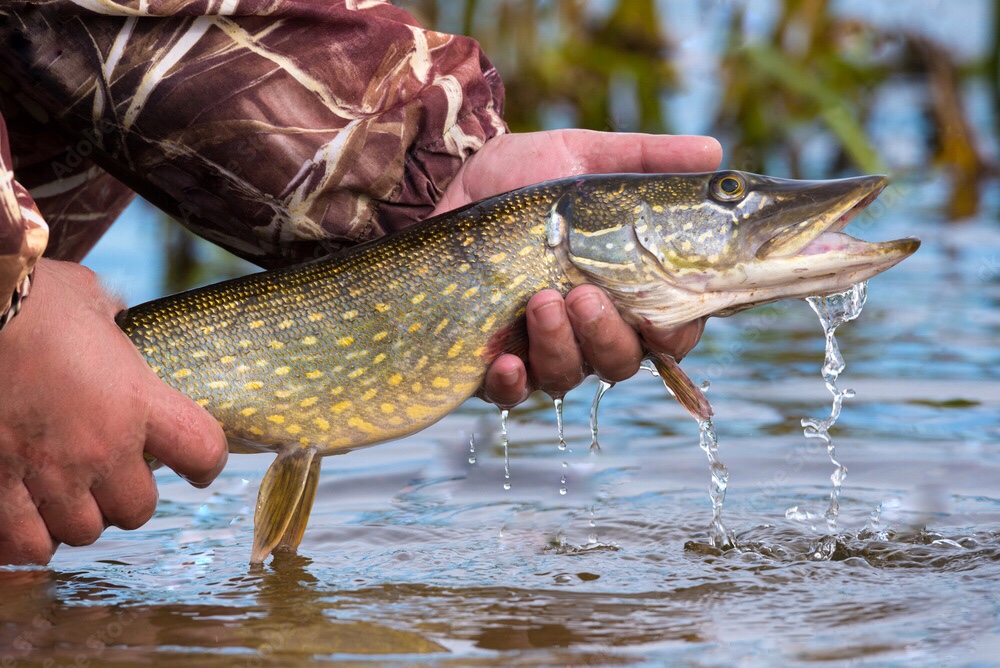
For many, pike fishing is a beloved hobby that extends over almost the whole year. Years of experience and professional knowledge are not really necessary to succeed in pulling up the occasional swimmer – with solid equipment and decent technique, you often get far even as a beginner. Pike live and thrive in the northern hemisphere in fresh and brackish water, and the fish are almost impossible to miss. The body can vary in color from yellow-white with green highlights to really dark black-green with characteristic yellow spots, it is elongated and has the dorsal fin located far back. The pike is classified as Sweden’s top predatory fish and it is of course not for nothing that it has a reputation for being quite voracious. The famous voraciousness also comes in handy when fishing, as the pike is more than happy to bite both jerks and jigs, as well as traditional spoons and shads. Perhaps it is both the simplicity and the possibility of using different types of equipment that have made pike fishing Sweden’s most popular form of sport fishing.
Good equipment a prerequisite
The right equipment for pike fishing doesn’t have to be particularly heavy, large or expensive – the most important thing is to aim for rod, line and lures with durable constructions made from durable materials. Pikes are both large and heavy fish, which are also endowed with very strong jaws. Fishing equipment that can handle even the heaviest and oldest old pike is therefore a smart investment for those aiming for a proper big catch.
Pike are mainly fished with a spinning rod, jerk rod or reel rod, and among the most popular lures we find jig baits and jerks. However, there is basically no right or wrong when it comes to pike fishing, as this Nordic predatory fish is very grateful to be hooked with different fishing styles. Pike can be spin-fished, fly-fished, baited or driven in with a reel rod – which style works best can thus vary from person to person based on taste and preference. A common recommendation for all fishing styles is to invest in stiff rods that give you the opportunity to guide the hook properly without giving way and bending too much. Because even though the pike likes to nibble on most things, the hooking itself is the most critical moment when it comes to both getting it in place between the fish’s jaws, and also getting it to stay there. Complete your rod with a sturdy and really sharp treble hook for the best chance of getting a hold.
Choose the right bait
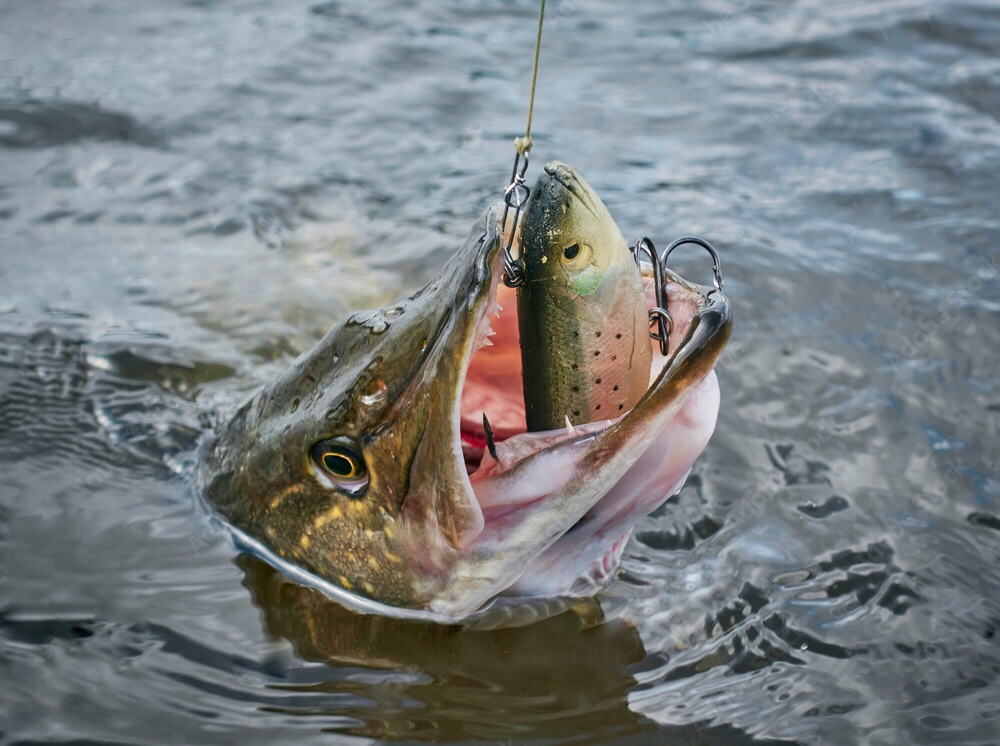
As previously mentioned, the pike is a very grateful fish to fish as it has an appetite called duga and is more than happy to bite at most things that move in the water. Jigs, jerkbaits, wobblers and spoons can therefore be used as bait – it really all comes down to which technique you prefer. However, there are some tips that can be good to keep in mind to further increase the chances of a pacifier. Are you looking for a good rod for
Adapting the bait to where in the water you think the pike is is always a good idea. Depending on the season, climate and water conditions, the fish can vary between shallower and deeper water, and then it is important to choose a bait that works. In summer and winter, pike generally prefer deeper water or water with rich vegetation, while they are more active and playful in spring and autumn and are thus often found in shallower water. Adapt the fishing with shallow or deep baits, and feel free to adjust the depth with the help of extra weights on them.
As I said, the pike is a voracious fish that can easily eat fish up to half its own size. Therefore, don’t be afraid to choose slightly larger strokes, preferably at least 15 cm long. The color is normally adjusted according to the current weather, time of day and whether the water is cloudy or clear. During the cooler periods of the year, we recommend, for example, choosing slow-moving baits, as the pike’s energy level is generally lower and it therefore swims more slowly. Furthermore, it is a good idea to choose bait based on the pike’s activity in the water and baits that, as far as possible, imitate the food the pike hunts in the water in question. If, for example, there are plenty of perch where you are going to fish – choose a bait that imitates the movements of the perch in the water.
Pike fishing season
One of the great advantages of pike fishing is the possibility of actually being able to fish successfully all year round. During the period from March to May, the pike has its spawning period when it is found mainly in shallow bays along the coast, alternatively in lake bays with rich vegetation. In some parts of the country, there is a special peace period between April 1 and May 31, but this mainly applies in the areas around Öland, Gotland and Kalmarsund. In other places it is perfectly possible to fish for pike at all times of the year.
Spring and summer fishing
Our four Swedish seasons mean pike fishing in different ways and with different allure. Many have spring as their favorite period for pike fishing when the fish are normally at their most active, playful and eager to peck for bait. In summer, both the air and water temperatures are higher, which means that the pike like to go down into deeper water or into denser reeds in order to avoid the sun’s warming rays. You have the best chance of a successful catch during the summer if you avoid fishing in the middle of the day when it is the hottest, and instead aim for the morning or evening.
If you are looking for Salmon, you can fish it 1/3 – 14/10. It catches everything best in autumn, but you have a good chance of catching a lot of salmon if the water exceeds 10 degrees. The salmon are particularly fond of lures such as spinners and spoon lures, but wobblers also work well. If you are thinking about choosing a fishing rod for salmon fishing, I recommend that you read my post about fishing rods for salmon.
Autumn and winter fishing
If you are looking to beat your own personal best or catch the area’s biggest pike in years and days – yes, then autumn is definitely the time to aim for. From September until November, the pike make sure to properly prepare for the coming winter period, and the chances of getting a real bather on the hook are very high. The days are somewhat shorter, the water temperature has dropped and the pike are generally much less shy than they are during the warm and bright summer months. However, the chilly water means that the fish can become a bit stiff and slow in their bites, so it is important to have the hook in the water as much as possible in order not to miss the short but really intense periods of bites.
The perch also nibble the best during the autumn. During the summer, there is plenty of food and small fish. In autumn, this subsides and the perch seek deeper water. 3-10 meters is considered to be a depth where the perch are during the autumn. During the summer, they usually move higher up where they can stand and sunbathe. If you are looking for a good rod for perch fishing, I have listed the best fishing rods for perch.
Winter is not the most ideal period for pike fishing as the chilly climate and cold air and water temperatures make the pike slow and lethargic. But having said that, we would like to point out that it is far from impossible to get a pacifier during the winter – on the contrary. It is important to be patient and to adapt the equipment and technology based on the current conditions. Regardless of whether the water is completely frozen or not, the pike like to find a plant-covered bottom or deep holes to more or less hibernate in – which means that it is deep bottom fishing that applies. Too small baits are lost, as well as lack of time when the pike’s energy is at a low level and its reaction and cutting ability is accordingly. Bet on large slow-sinking wobblers or offset-triggered shad jigs as lures and make sure not to be in too much of a hurry. With the right technique, the right equipment and the right attitude, it is not impossible to succeed in pulling up a big pike even in winter.
Best places for pike fishing

To the great joy of all pike anglers, we can state that pike thrive particularly well in our Swedish waters, and the chances of successful fishing are good in both the north and the south. There is no specific place that has been singled out as Sweden’s best pike fishing water, but a good rule of thumb is to look for water where the fishing pressure is not too great and the availability of large bait fish is good. This is because the pike thrives best in water where it can be left alone. Stockholm’s inner archipelago can, for example, be good to avoid, as there is far too much activity from fishermen as well as seals and cormorants. Instead, choose a calmer lake with good vegetation, or one of the rivers far up north. For those who want to try their luck at sea, there are plenty of lovely archipelagos to choose from. The brackish waters of the Baltic Sea and the Gulf of Bothnia have good pike stocks, while the west coast is more or less empty due to the salty water.

Projektnamn
En kort beskrivning av ditt projekt
Lorem ipsum dolor sit amet, consectetur adipiscing elit. Sed vitae massa eu nisi vulputate congue ut a tellus. Proin accumsan purus et dui venenatis, malesuada fermentum sem efficitur. Sed dignissim tristique congue. Vestibulum neque augue, varius id finibus vel, cursus eget arcu. Aliquam at nulla diam. Integer faucibus, libero at lacinia sollicitudin, elit nisi iaculis velit, non malesuada ante est vel ex. Phasellus id feugiat leo. Donec quis tortor dolor.


Projektnamn
En kort beskrivning av ditt projekt
Lorem ipsum dolor sit amet, consectetur adipiscing elit. Sed vitae massa eu nisi vulputate congue ut a tellus. Proin accumsan purus et dui venenatis, malesuada fermentum sem efficitur. Sed dignissim tristique congue. Vestibulum neque augue, varius id finibus vel, cursus eget arcu. Aliquam at nulla diam. Integer faucibus, libero at lacinia sollicitudin, elit nisi iaculis velit, non malesuada ante est vel ex. Phasellus id feugiat leo. Donec quis tortor dolor.


 Nordic Fishing